Was this tool helpful?
Our free RNA Reverse Complement tool helps researchers and students who work with RNA sequences. You can use it to analyze transcript data, design siRNAs, or study viral genomes. Just enter your FASTA or raw RNA sequence to quickly obtain the reverse complement and view important statistics, such as GC content. Your data always stays private.

How to Use This Tool
Using the tool is straightforward. First, provide your RNA sequence by pasting it directly into the text box, using the “File Upload” button, or simply dragging and dropping your file into the designated area.
Next, customize the output. From the Operation menu, choose your desired function (e.g., Reverse Complement). You can also set the Output Case (e.g., uppercase) and define a Line Width for proper formatting.
Finally, click “Run Analysis” to process your sequence. The result will appear instantly. To start over, click the “Clear All” button
Key Features for RNA Analysis
1. RNA-Aware Input
The tool is built to handle RNA sequences, correctly interpreting Uracil (U) alongside A, C, and G. It accepts both raw sequences (AUGCUAC...) and standard FASTA format. A default header (>Unnamed_RNA_Sequence) is used if none is provided.
2. Core RNA Operations
Perform the exact transformation you need. For the original RNA sequence 5'-AUGC-3':
- Reverse Complement:
5'-GCAU-3'(Essential for antisense applications) - Reverse:
5'-CGUA-3'(Reverses the nucleotide order) - Complement:
5'-UACG-3'(Provides the base-paired strand without reversal)
3. Immediate Sequence Analytics
Get valuable insights without extra steps:
- Sequence Length: Instantly see the total number of nucleotides.
- GC Content (%): Automatically calculates the percentage of Guanine and Cytosine, a key factor in determining RNA secondary structure stability and designing functional RNAs.
What is an RNA Reverse Complement?
The reverse complement of an RNA sequence is the sequence of its binding strand, but read in the opposite direction. This process has two steps:
- Complementation: The complementary base for each nucleotide is found. In RNA, Adenine (A) pairs with Uracil (U), and Guanine (G) pairs with Cytosine (C).
- Reversal: This new sequence of complementary bases is then reversed.

For example, the reverse complement of 5′-GUCAU-3′ is 3′-CAGUA-5′, which is conventionally written in the 5′ to 3′ direction as 5′-AUGAC-3′.
Applications of the RNA Reverse Complement

While the concept is shared with DNA, the reverse complement is critical for many RNA-specific applications that are central to modern biology and medicine:
- siRNA & shRNA Design: The guide (or antisense) strand of a small interfering RNA (siRNA) is the reverse complement of the target messenger RNA (mRNA) sequence it is designed to silence.
- Viral Genome Analysis: Many viruses, such as influenza, HIV, and coronaviruses, have RNA genomes. Analyzing these genomes and designing diagnostic primers or antiviral therapies often requires working with the reverse complement.
- Transcriptome (RNA-Seq) Analysis: When studying gene expression, transcripts (RNA) can be read from either DNA strand. Analyzing both orientations is crucial for a complete picture.
- Antisense Oligonucleotide (ASO) Therapies: ASOs are synthetic nucleic acid strands that bind to target RNAs. Their sequence is the reverse complement of the target, allowing them to modify its function.
Developers
If you want to add RNA sequence tools to your bioinformatics pipeline, we offer integration options, including an API, to help automate your work. To learn more about programmatic access, contact us.
FAQ
Meet the Authors
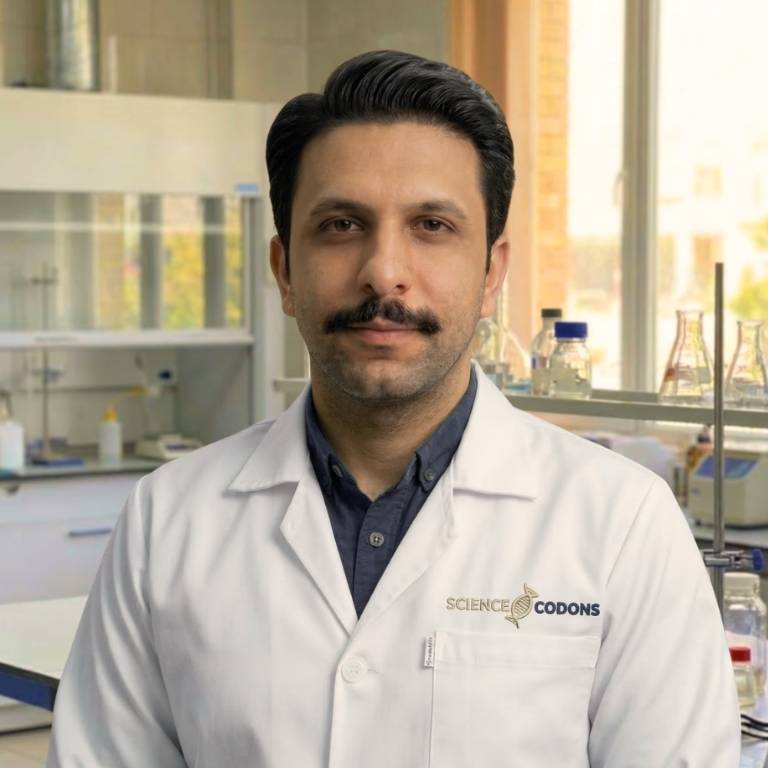
Mahdi Morshedi Yekta
Founder & Bioinformatics Developer
Mahdi is the founder of ScienceCodons and a Medical Biotechnologist with a deep passion for computational biology. Holding an M.Sc. in Medical Biotechnology, he specializes in transforming complex biological algorithms into accessible, high-performance web tools, bridging the gap between laboratory sciences and software engineering.

Fatemeh Faryadras
Medical Biotechnologist & Researcher
Fatemeh is a Medical Biotechnologist and researcher. With extensive expertise in genetic engineering, molecular cloning, and cancer biology, she combines her rigorous laboratory background with intuitive design principles to create reliable, user-centered scientific calculators and tools.

Dr. Mosayeb Rostamian
Assistant Professor, Infectious Diseases Research Center
Certified Scientific Reviewer
Google ScholarExpert Review Process
To ensure the highest quality and scientific accuracy, this tool's underlying algorithms, formulas, and edge-case handling have been thoroughly reviewed and validated by Dr. Mosayeb Rostamian.
The "Reviewed By" badge signifies that an independent expert has evaluated the tool's logic to guarantee accuracy and alignment with the current consensus in the scientific community.