Translate DNA/RNA sequences into protein sequences across various genetic codes.
Enter DNA/RNA Sequence
Accepts A, T, G, C, U characters. Whitespace will be ignored.
Translation Options
Was this tool helpful?
Our DNA to Amino Acid Converter helps you translate genetic sequences into protein structures quickly and easily. You can use it with standard or specialised genetic codes, and it accepts DNA or RNA inputs (A, T, G, C, U). The tool gives you fast, accurate translations for both forward and reverse strands. It also lets you view your protein data in the format you prefer, making genetic analysis simpler for researchers, students, and scientists.
How to Use
- Enter Sequence: Paste your raw DNA or RNA sequence into the large text area. Don’t worry about spaces or line breaks; the tool automatically cleans them.
- Select Options:
- Choose the appropriate Genetic Code from the dropdown menu.
- Select your desired Output Format.
- Check the boxes for Forward Strand and/or Reverse Strand depending on your analysis requirements.
- Translate: Click the blue Translate button to generate your amino acid sequence instantly.
- Reset: Use the Clear All button to wipe the fields and start a new analysis.
What is DNA to Protein Translation?
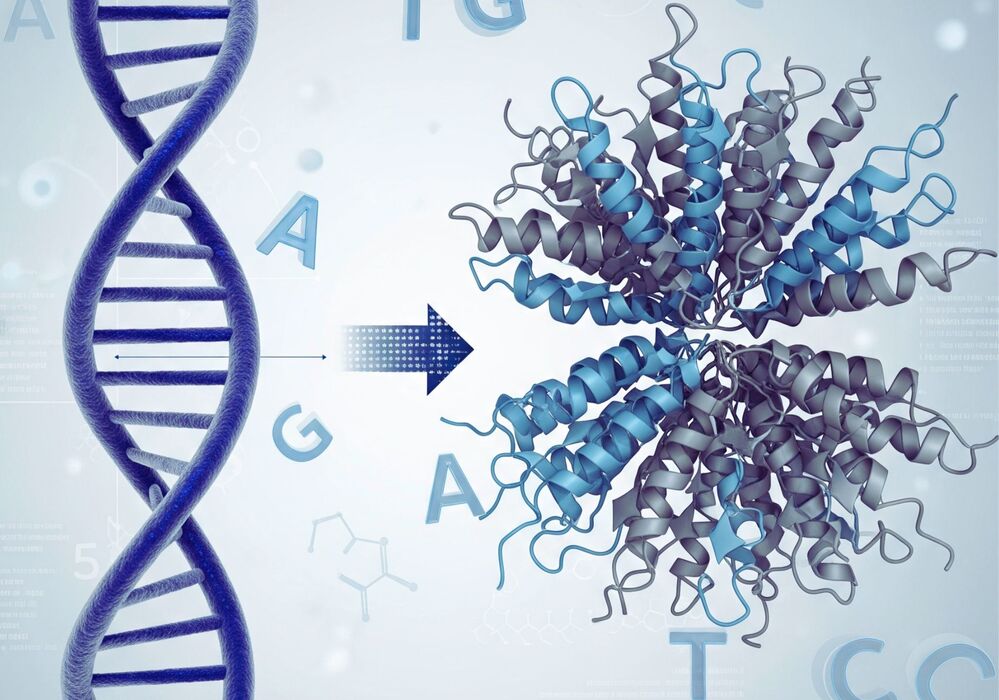
DNA to protein translation is the key process where genetic information in DNA is turned into proteins. This follows the “Central Dogma” of molecular biology: DNA is copied into RNA, and RNA is then used to make proteins. During translation, the sequence is read in groups of three, called “codons.” Each codon matches a specific amino acid, which is the building block of proteins.
Our DNA to Amino Acid Converter emulates the biological translation process through a software algorithm designed to provide accurate amino acid sequences from nucleotide data. Once you input a DNA or RNA sequence, the software first removes any extraneous whitespace and checks for valid nucleotide symbols. It then divides the sequence into consecutive codons, which are sets of three nucleotides. Based on the selected Genetic Code table (such as Standard or Vertebrate Mitochondrial), the program systematically maps each codon to its corresponding one-letter amino acid code (for instance, ‘ATG’ is translated as ‘M’ for Methionine). The converter also allows users to analyse both the forward and reverse strands of the sequence, facilitating the identification of the optimal reading frame and enhancing the accuracy of predicted protein structures.
Key Features
- Dual Input Support: Seamlessly processes both DNA (A, T, G, C) and RNA (A, U, G, C) sequences. The tool automatically ignores whitespace, but strictly validates the input to ensure only valid nucleotide characters (A, T, G, C, U) are processed, guaranteeing data integrity.
- Comprehensive Genetic Codes: While the “Standard” code is the default, you can select from various genetic codes to suit specific organisms or organelles (e.g., Vertebrate Mitochondrial, Yeast, Plastid).
- Strand Selection: Analyse your sequence thoroughly by choosing to translate the Forward Strand, the Reverse Strand, or both simultaneously to catch every potential open reading frame.
- Flexible Output Formats: Customise how your results are displayed. For example, you can select the “Compact” format, which provides a concise, uninterrupted amino acid sequence (e.g., M-T-K-V), or alternatively, opt for the “FASTA” output, which presents your sequence in the widely used FASTA format suitable for bioinformatics applications. Additional options, such as “One-Letter” or “Three-Letter” amino acid codes, are also available to match varying documentation requirements.
- Real-time Stats: Instantly see the nucleotide count of your input as you type or paste.
Frequently Asked Questions (FAQ)
References
Rasmus Wernersson, Anders Gorm Pedersen, RevTrans: multiple alignment of coding DNA from aligned amino acid sequences, Nucleic Acids Research, Volume 31, Issue 13, 1 July 2003, Pages 3537–3539, https://doi.org/10.1093/nar/gkg609
Panu Artimo, Manohar Jonnalagedda, Konstantin Arnold, Delphine Baratin, Gabor Csardi, Edouard de Castro, Séverine Duvaud, Volker Flegel, Arnaud Fortier, Elisabeth Gasteiger, Aurélien Grosdidier, Céline Hernandez, Vassilios Ioannidis, Dmitry Kuznetsov, Robin Liechti, Sébastien Moretti, Khaled Mostaguir, Nicole Redaschi, Grégoire Rossier, Ioannis Xenarios, Heinz Stockinger, ExPASy: SIB bioinformatics resource portal, Nucleic Acids Research, Volume 40, Issue W1, 1 July 2012, Pages W597–W603, https://doi.org/10.1093/nar/gks400
Meet the Authors

Mahdi Morshedi Yekta
Founder & Bioinformatics Developer
Mahdi is the founder of ScienceCodons and a Medical Biotechnologist with a deep passion for computational biology. Holding an M.Sc. in Medical Biotechnology, he specializes in transforming complex biological algorithms into accessible, high-performance web tools, bridging the gap between laboratory sciences and software engineering.

Fatemeh Faryadras
Medical Biotechnologist & Researcher
Fatemeh is a Medical Biotechnologist and researcher. With extensive expertise in genetic engineering, molecular cloning, and cancer biology, she combines her rigorous laboratory background with intuitive design principles to create reliable, user-centered scientific calculators and tools.

Dr. Mosayeb Rostamian
Assistant Professor, Infectious Diseases Research Center
Certified Scientific Reviewer
Google ScholarExpert Review Process
To ensure the highest quality and scientific accuracy, this tool's underlying algorithms, formulas, and edge-case handling have been thoroughly reviewed and validated by Dr. Mosayeb Rostamian.
The "Reviewed By" badge signifies that an independent expert has evaluated the tool's logic to guarantee accuracy and alignment with the current consensus in the scientific community.