Mahdi Morshedi Yekta
Founder & Lead AuthorI'm a medical biotechnologist, researcher, scientific tool developer, and scientific visual designer with interests in bioinformatics, computational biology, data visualization, and scientific communication.
I founded Science Codons in 2022 to make practical scientific resources more accessible to researchers and students.
Alongside research and tool development, I also create scientific visualizations and graphical abstracts, turning complex biological concepts, workflows, and research findings into clear and engaging graphics.
-
Biology

How to Convert SRA to FASTQ 2026: Complete Guide
If you work in bioinformatics, you often come across data from NCBI’s Sequence Read Archive (SRA). This massive database stores…
-
Biology
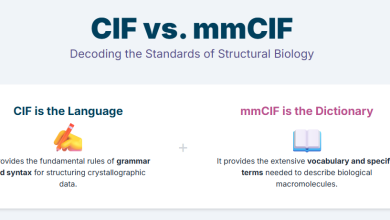
CIF vs mmCIF: What’s the difference and which should you use?
If you work with structural biology data, you’ve likely seen the terms CIF and mmCIF used frequently, perhaps even interchangeably.…
-
Biology
CIF vs. PDB: Understanding the Key Differences
For decades, structural biologists have relied on specialized file formats to store and exchange the detailed three-dimensional coordinates of macromolecules.…
-
Biochemistry
Significance of adding phosphate group to glucose in the glycolysis
The first change that occurs immediately after glucose enters a cell is phosphorylation, where a phosphate group (PO43−)is added to…
-
Genetic
Are black tomatoes genetically modified?
Black tomatoes are varieties of tomatoes that range in color from deep purple to almost black. They generally have a…
-
Genetic
Genetically Modified Food Examples: 2026 Overview
Did you know that over 90% of the corn grown in the United States is genetically modified? To create genetically…
-
Science
Prokaryotic Genome Assembly: A Step-by-Step Guide 2026
Prokaryotic genome assembly is the process of reconstructing a complete, accurate, and contiguous representation of a bacterium’s or archaeon’s DNA…
-
Biology
SRA Toolkit Installation Guide (2026): Windows, Linux, and macOS
In today’s era of big data, genomic information has become a cornerstone of research, offering profound insights into biology, medicine,…
-
Biochemistry
How does glucose enter the cell?
Glucose enters the cell through specialized proteins known as glucose transporters, or GLUT transporters. These transporters facilitate the movement of…
-
Biochemistry
Noncompetitive vs Uncompetitive enzyme inhibition (2026)
As you may know, there are four main types of enzyme inhibition: noncompetitive, uncompetitive, competitive, and mixed inhibition mechanisms. The…