
📟Preview



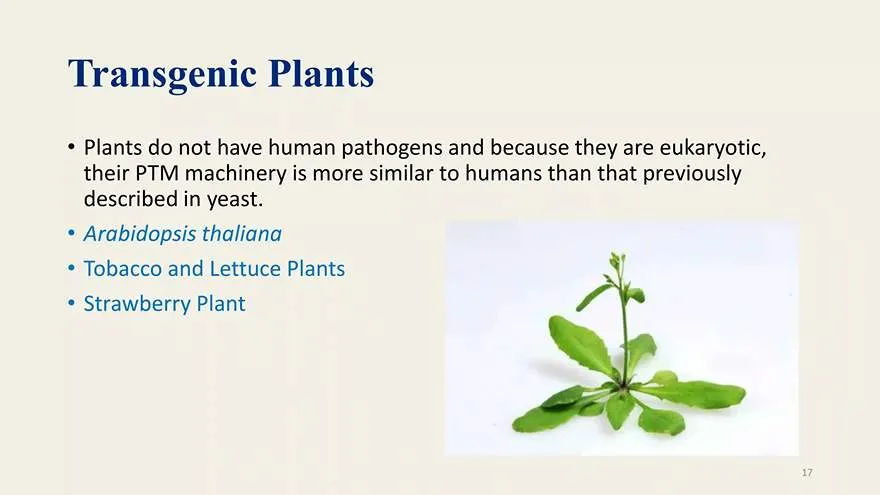

The Microbial Insulin Production presentation provides an in-depth examination of recombinant insulin production and the challenges associated with meeting the rising demand for this critical biopharmaceutical. The introduction highlights the surging number of diabetes patients, straining the production capacity and driving up costs. Recombinant human insulin is primarily manufactured using E. coli and Saccharomyces cerevisiae, although other expression systems like Pichia pastoris and transgenic plants are also explored.
The history section presumably discusses the development of insulin production, which has been a significant milestone in the treatment of diabetes. The document then examines the structure and function of insulin, a vital hormone for regulating blood sugar levels, and its synthesis within the body.
The core of the presentation focuses on the production of insulin through Recombinant DNA technology, employing a two-chain method. The bio-production steps are detailed, beginning with gene isolation and plasmid insertion, followed by transfection, medium preparation, bioreactor fermentation, crude product isolation, purification, and chain joining.
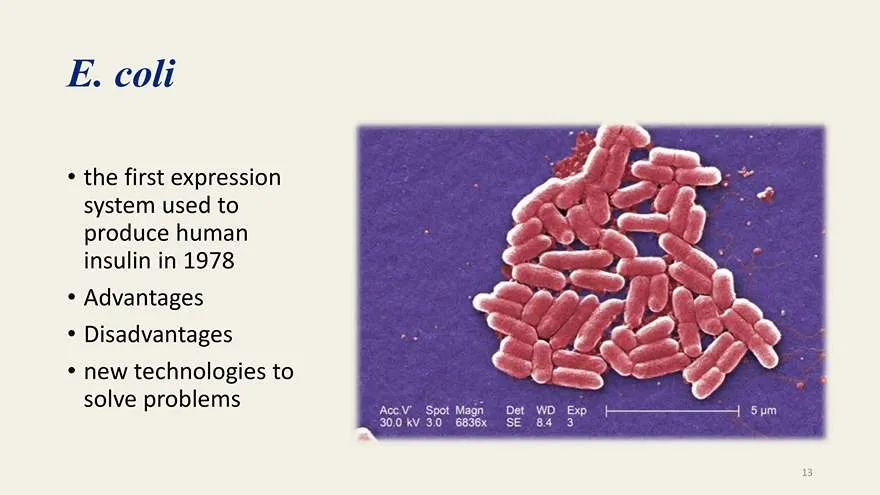
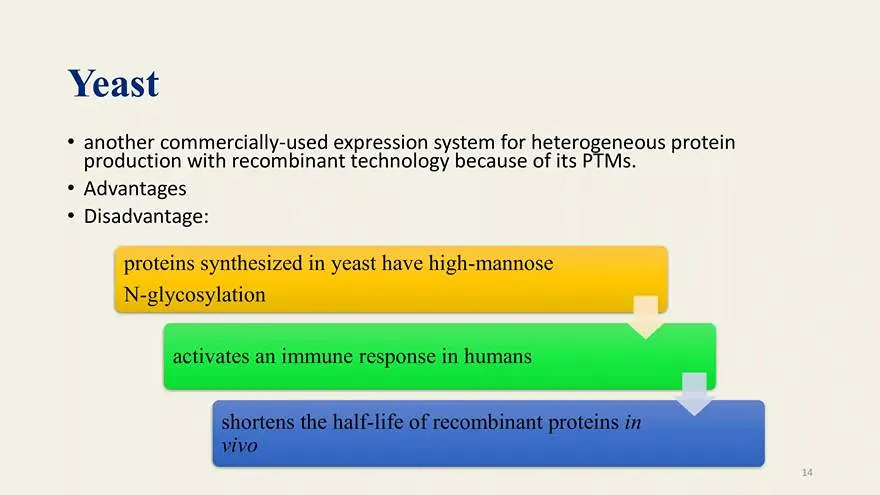
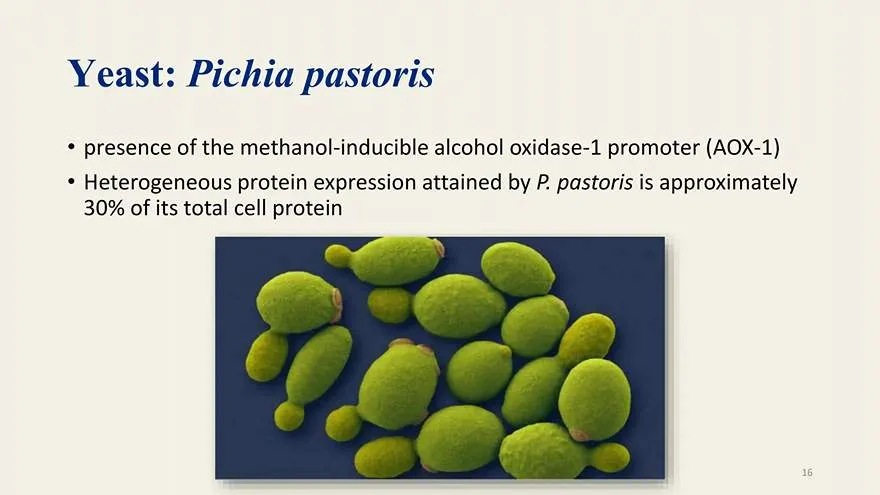
Various expression systems for insulin production are compared, including E. coli, which was the first system used in 1978, yeast (Saccharomyces cerevisiae and Pichia pastoris), and transgenic plants like Arabidopsis thaliana, tobacco, lettuce, and strawberry. Each system has its advantages and disadvantages, with yeast being noted for its ability to perform post-translational modifications (PTMs), although it can lead to immune responses in humans.
In conclusion, the document underscores the urgent need for more efficient insulin production methods due to the escalating diabetes rates and the limitations of current technologies. It emphasizes the necessity of innovative solutions to address the production capacity and cost issues to ensure a steady supply of insulin for the growing number of diabetes patients.
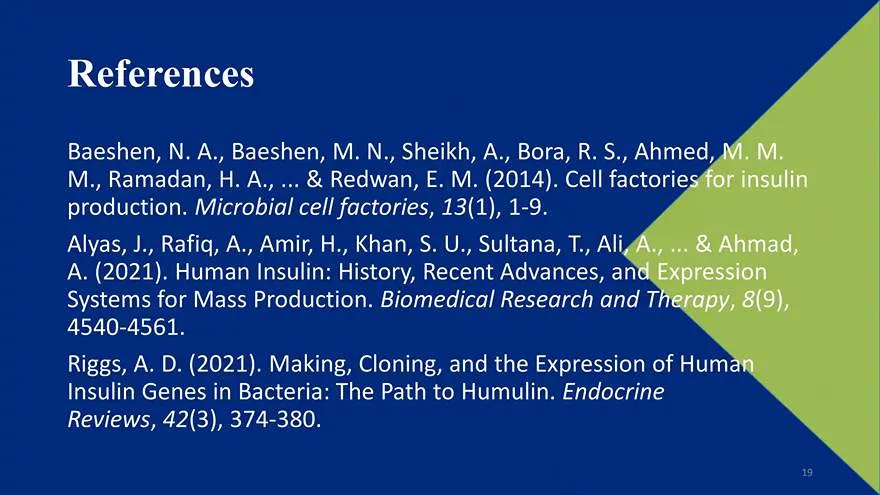
The references section cites several studies and articles that have contributed to the understanding and advancing of insulin production, including works by Baeshen et al., Alyas et al., and Riggs. These sources provide further insights into the scientific and technical aspects of insulin manufacturing and its historical context.
This article was reviewed for accuracy by Dr. Bahman Akbari. The content is based on current scientific evidence and is intended for educational purposes only. It does not constitute medical advice and should not be used as a substitute for consultation with a qualified health professional.
References
- Baeshen, N. A., Baeshen, M. N., Sheikh, A., Bora, R. S., Ahmed, M. M.M., Ramadan, H. A., … & Redwan, E. M. (2014). Cell factories for insulin production. Microbial cell factories, 13(1), 1-9.
- Alyas, J., Rafiq, A., Amir, H., Khan, S. U., Sultana, T., Ali, A., … & Ahmad,A. (2021). Human Insulin: History, Recent Advances, and Expression Systems for Mass Production. Biomedical Research and Therapy, 8(9),4540-4561.
- Riggs, A. D. (2021). Making, Cloning, and the Expression of HumanInsulin Genes in Bacteria: The Path to Humulin. EndocrineReviews, 42(3), 374-380.


very well-designed and complete in science. thanks for sharing.