Did you know that over 90% of the corn grown in the United States is genetically modified? To create genetically modified foods, scientists alter the DNA of organisms using genetic engineering techniques. This allows them to impart specific traits, such as enhanced nutrition or pest resistance, to the food.
This article aims to provide a comprehensive overview of common genetically modified food examples, exploring their modifications, prevalence, uses, benefits, concerns, and regulatory landscape.
Background and History of GM Foods
The story of genetically modified foods started in the 1980s when scientists first engineered a plant with foreign DNA, marking a revolutionary step in biotechnology. This discovery allowed genetically modified (GM) crops to enter the market in the 1990s, with the Flavr Savr tomato, which was developed to ripen more slowly, becoming the first to do so in 1994.

In 1996, Bt corn, engineered for insect resistance, hit the market, followed by the rapid adoption of crops like Roundup Ready soybeans. Since then, GM technology has exploded worldwide; by 2030, countries including the United States, Brazil, and India will have planted GM crops totaling more than 310 million hectares.
Examples of Genetically Modified Foods
This section provides a detailed look at some of the most common GM foods examples:
- Corn (Maize)
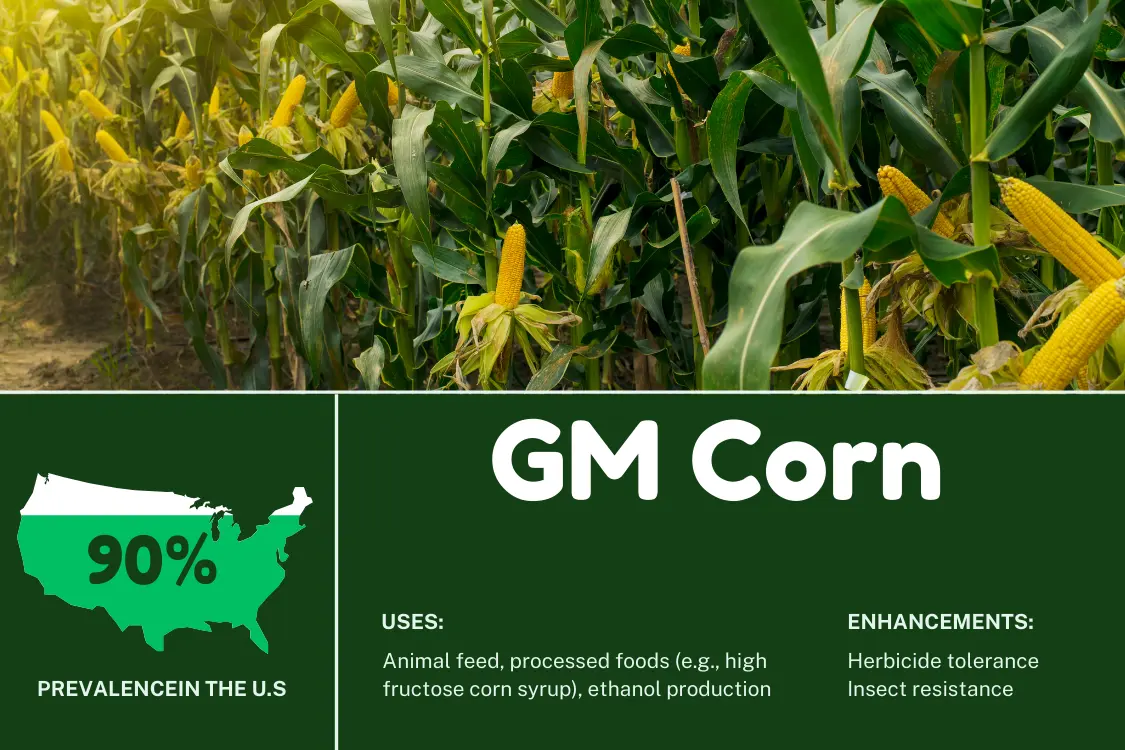
- Types of Modifications: Herbicide tolerance (e.g., Roundup Ready), insect resistance (e.g., Bt corn).
- Prevalence: Over 90% of U.S. corn is genetically modified.
- Uses: Animal feed, processed foods (e.g., high fructose corn syrup), ethanol production.
- Soybeans

- Types of Modifications: Primarily herbicide tolerance (e.g., Roundup Ready).
- Prevalence: About 94% of soybeans in the U.S. are GM.
- Uses: Animal feed, processed foods (e.g., soybean oil, soy protein), tofu, soy milk.
- Cotton

- Types of Modifications: Insect resistance (Bt cotton), herbicide tolerance.
- Prevalence: Around 95% of U.S. cotton is genetically modified.
- Uses: Textiles, cottonseed oil.
- Canola (Rapeseed)

- Types of Modifications: Herbicide tolerance.
- Prevalence: Over 90% of canola in Canada is GM.
- Uses: Canola oil, animal feed.
- Sugar Beets

- Types of Modifications: Herbicide tolerance (e.g., Roundup Ready).
- Prevalence: Nearly 100% of U.S. sugar beets are GM.
- Uses: Sugar production.
- Alfalfa
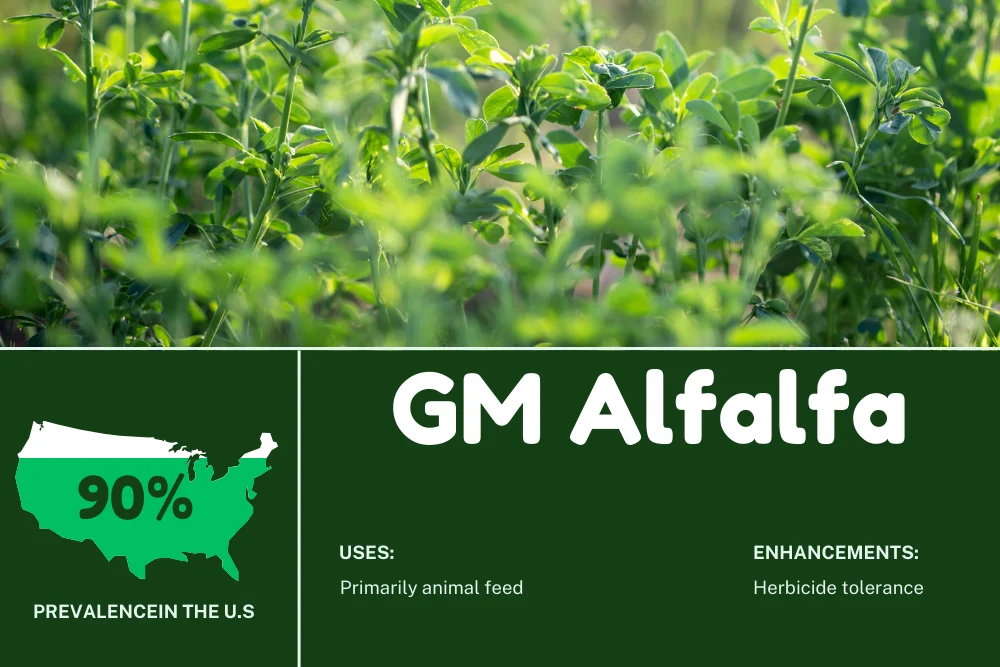
- Types of Modifications: Herbicide tolerance.
- Prevalence: Approximately 90% of U.S. alfalfa is genetically modified.
- Uses: Primarily animal feed.
- Papaya

- Types of Modifications: Virus resistance (specifically, Papaya Ringspot Virus), a modification that saved Hawaii’s papaya industry.
- Prevalence: Over 80% of Hawaiian papayas are GM.
- Uses: Fresh fruit consumption.
- Potatoes

- Types of Modifications: Insect resistance (Bt potatoes), reduced bruising and browning (e.g., Innate potatoes).
- Prevalence: Around 20-30% in certain regions.
- Uses: Fresh consumption, processed foods (e.g., fries, chips).
- Apples
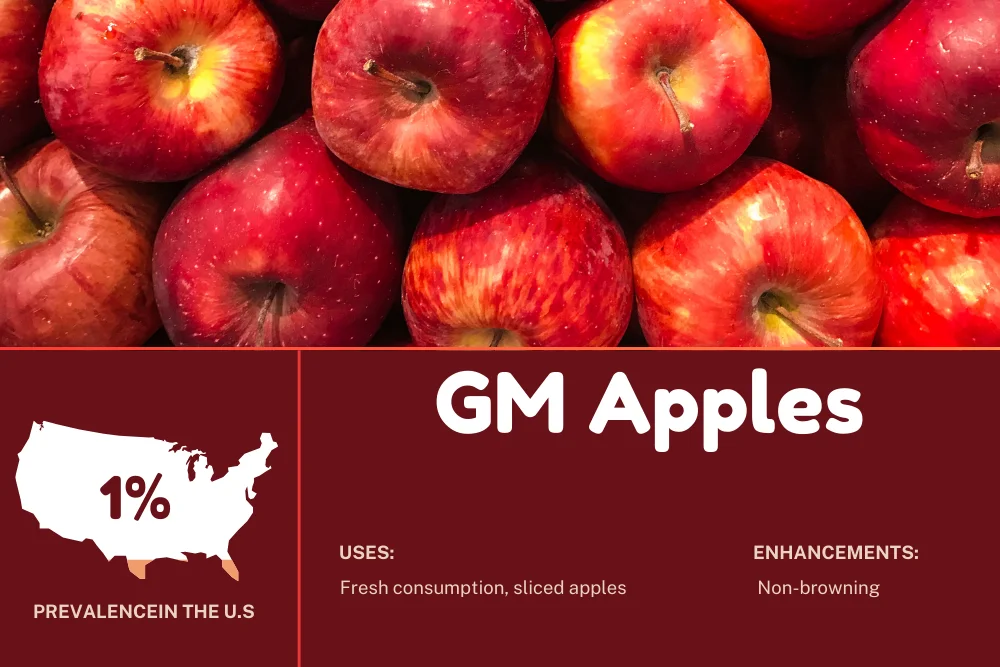
- Types of Modifications: Non-browning (e.g., Arctic Apples).
- Prevalence: Relatively new, with limited availability.
- Uses: Fresh consumption, sliced apples.
- Squash

- Types of Modifications: Virus resistance.
- Prevalence: About 10-20% of U.S. squash is GM.
- Uses: Fresh consumption.
- GM Salmon (AquaBounty Salmon): Modified for faster growth and efficient feed use.

- GM Pigs (Enviropig): Engineered to produce less phosphorus in waste, reducing environmental impact.

Benefits of GM Foods
While insect-resistant versions like Bt corn limit pesticide use, saving costs and environmental damage, they increase agricultural yields, helping feed a rising world population. By limiting tillage, herbicide-tolerant crops help simplify weed control and lower soil erosion. Some GM foods, such as Golden Rice, are boosted with vitamin A, improve nutrition, and help solve problems in underdeveloped areas. GM crops also can be made to withstand salinity or drought, hence strengthening resistance to climate change.
Risks and Concerns of GM Foods
Even though GM foods have some benefits, they also cause real worries. Gene flow to wild plants, which could make weeds immune, and the rise of “superweeds” from too much use of herbicides are environmental hazards; socioeconomically, the power of biotech companies like Monsanto makes people worry that big companies would take over seeds, which would hurt small farms and biodiversity. Possible health risks, like allergenicity or unknown long-term effects, are still being discussed.
The Future of GM Foods
The future of GM foods hinges on innovation and adaptation. Gene editing tools like CRISPR promise precise modifications, potentially yielding crops that resist climate stressors or reduce waste, like non-browning apples. Experts like Dr. Jennifer Kuzma emphasize, “Transparent regulation and public trust are critical for GM’s future.” GM technology could play a pivotal role as global challenges like food security intensify, provided it navigates public skepticism and ethical debates.
Conclusion
Genetically modified foods are a significant part of our modern food landscape, offering a complex mix of potential benefits and valid concerns. Understanding the specifics of GM food examples – the modifications, uses, and prevalence – is crucial for informed decision-making. The evolution of genetic modification technologies, particularly gene editing, suggests an even more dynamic future for GM foods. Ultimately, navigating this future effectively requires a balanced approach that embraces scientific innovation while prioritizing safety, sustainability, transparency, and ethical considerations. The conversation around GM foods is far from over, and your informed engagement is essential in shaping the future of our food system.
Frequently Asked Questions
This article was reviewed for accuracy by Dr. Bahman Akbari. The content is based on current scientific evidence and is intended for educational purposes only. It does not constitute medical advice and should not be used as a substitute for consultation with a qualified health professional.
Sources:
- Ow, D. W. (2007). GM maize from site-specific recombination technology, what next?. Current Opinion in Biotechnology, 18(2), 115-120.
- Herman, E. M. (2003). Genetically modified soybeans and food allergies. Journal of experimental botany, 54(386), 1317-1319.
- Trapero, C., Wilson, I. W., Stiller, W. N., & Wilson, L. J. (2016). Enhancing integrated pest management in GM cotton systems using host plant resistance. Frontiers in Plant Science, 7, 500.
- Sohn, S. I., Pandian, S., Oh, Y. J., Kang, H. J., Ryu, T. H., Cho, W. S., … & Shin, K. S. (2021). A review of the unintentional release of feral genetically modified rapeseed into the environment. Biology, 10(12), 1264.
- Bennett, R., Phipps, R., Strange, A., & Grey, P. (2004). Environmental and human health impacts of growing genetically modified herbicide‐tolerant sugar beet: a life‐cycle assessment. Plant Biotechnology Journal, 2(4), 273-278.
- Kumar, S. (2011). Biotechnological advancements in alfalfa improvement. Journal of applied genetics, 52, 111-124.
- Gonsalves, C., Lee, D. R., & Gonsalves, D. (2013). The adoption of genetically modified papaya in Hawaii and its implications for developing countries
- Waltz, E. (2015). USDA approves next-generation GM potato.
- Espley, R. V., Bovy, A., Bava, C., Jaeger, S. R., Tomes, S., Norling, C., … & Allan, A. C. (2013). Analysis of genetically modified red‐fleshed apples reveals effects on growth and consumer attributes. Plant Biotechnology Journal, 11(4), 408-419.
- Usha Rani, T. R., Yashwanth Gowda, R. N., Kavya, H., & Pooja, R. (2024). Genetic Engineering of Squash for Food and Health Security. In Genetic Engineering of Crop Plants for Food and Health Security: Volume 1
- Smith, M. D., Asche, F., Guttormsen, A. G., & Wiener, J. B. (2010). Genetically modified salmon and full impact assessment. Science
- Forsberg, C. W., Phillips, J. P., Golovan, S. P., Fan, M. Z., Meidinger, R. G., Ajakaiye, A., … & Hacker, R. R. (2003). The Enviropig physiology, performance, and contribution to nutrient management advances in a regulated environment: the leading edge of change in the pork industry. Journal of Animal Science