Is your gut secretly trying to steal the spotlight from your brain when it comes to recovering from a stroke? What if the road to recovery after a stroke begins, not with the brain, but with the gut? (Yes, that same gut you fill with pizza and coffee when you’re super busy!)
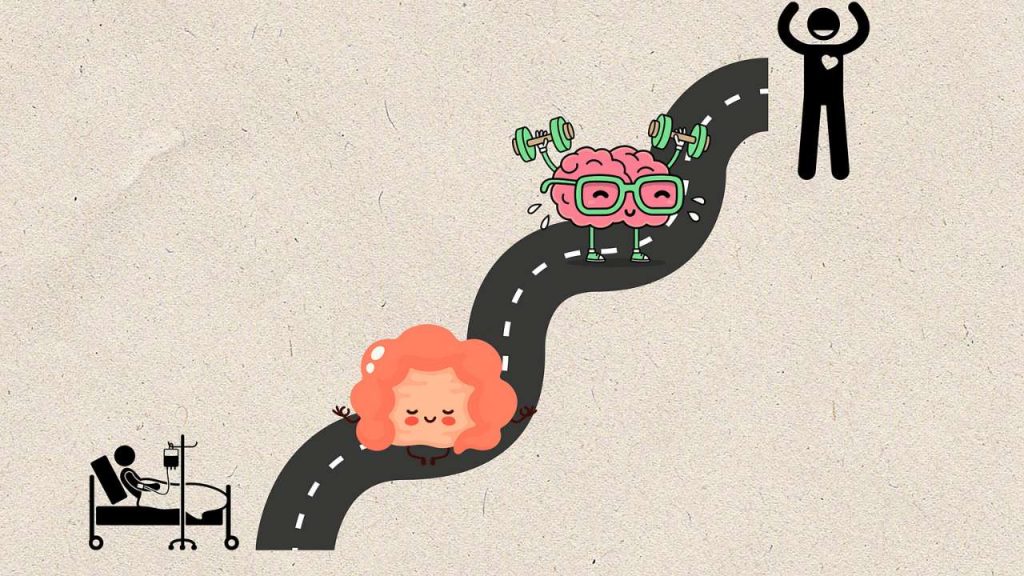
So, for ages now, strokes have been treated with the usual go-tos: those clot-busting drugs, physical therapy, and if things get really serious, surgery. These methods work hard to restore blood flow to the brain and help patients regain their mojo—physically and cognitively. But here’s the thing: All these old-school methods have been super focused on the brain, like it’s Beyoncé of the body, while totally neglecting the rest of the crew—you know, the body’s interconnected systems.
The Gut’s Role in Stroke Recovery: An Introduction
What if we’ve been missing a critical piece of the recovery puzzle this whole time? I mean, the gut microbiome—basically a crazy party of bacteria, viruses, and fungi just chilling in your digestive track. A healthy gut microbiome is like having a personal wellness team inside you: it boosts your immune function and takes down harmful inflammation like a pro. While its role in many diseases has been proven, its potential in stroke recovery? Well, let’s just say no one was inviting it to the recovery team meetings. Until now.
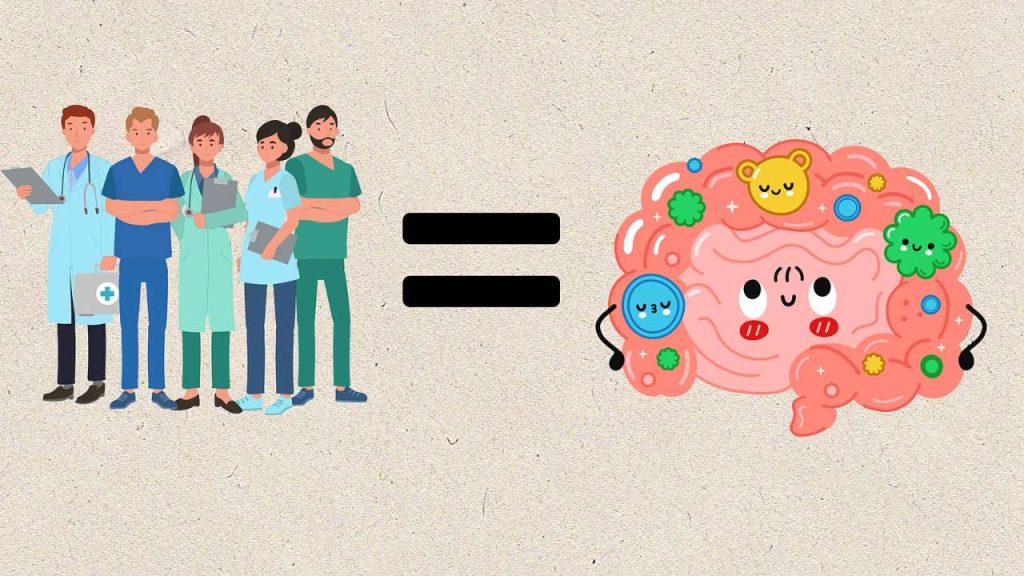
a super cool study just dropped that says healing the gut after a stroke could totally change the game. Fixing up the gut isn’t just about cutting down inflammation; it also helps keep your brain working better. This method could improve short-term recovery and even help with that long-term brain decline a lot of stroke survivors deal with. Crazy, right?
But wait—how does this work? How is it even possible? By the end of this video, you’ll get the answers. So hang tight—’cause this gut-brain twist is something you definitely don’t wanna miss!
Hello everyone, and welcome back to Science Codons! If you’re here for the latest and greatest in scientific discoveries— or just need another excuse to love your gut—you’re in the right place. In today’s episode, we’re diving into research so groundbreaking it might just make your stomach turn… with excitement! That’s right, we’re talking about healing the gut to help with stroke recovery. It sounds wild, doesn’t it? But stay with me—this isn’t one of those “my gut told me so” moments. This is science!
Here is what’s on the menu for today:
- First, we’ll talk about the gut-brain axis—basically, the Wi-Fi connection between your brain and your digestive system—and how it’s involved in stroke recovery.
- Then, we’ll unpack groundbreaking research from Texas A&M University that shows how healing the gut can actually reduce brain inflammation.
- Finally, we’ll discuss what all of this means for the future of stroke treatments and medicine.
All good? Let’s jump in!
Gut-Brain Connection in Stroke Patients
Strokes are one of the leading causes of death and disability worldwide. Survivors often face long-term challenges, like cognitive decline and an increased risk of dementia. While traditional treatments focus on the brain—because duh, that’s where the stroke happened—scientists have discovered a secret player in the game: the gut-brain axis.
So, here’s the deal: When a stroke occurs, the brain sends out distress signals, and these signals wreak havoc on the gut. The intestinal barrier—your gut’s very own bouncer—gets damaged, allowing harmful bacteria and toxins to sneak into the bloodstream. Once they’re in, they make their way to the brain, throwing fuel on the inflammation fire and making recovery even harder. And even if those pesky bacteria don’t make it all the way to the brain, the immune system still freaks out and goes into overdrive anyway, which— you guessed it—totally messes up the functioning of the brain.
Superheroes : Researchers at Texas A&M University
Their study, published in the November 2024 edition of Brain, Behavior, and Immunity, took a look at how fixing the gut might lower inflammation, protect the brain, and help with long-term recovery after a stroke. Spoiler alert: the results were pretty amazing. So, get this—turns out, The same drug used on either the brain or the gut had totally different outcomes. Treating the brain alone wasn’t enough to prevent long-term cognitive decline, but focusing on the gut? That’s where the magic happened.
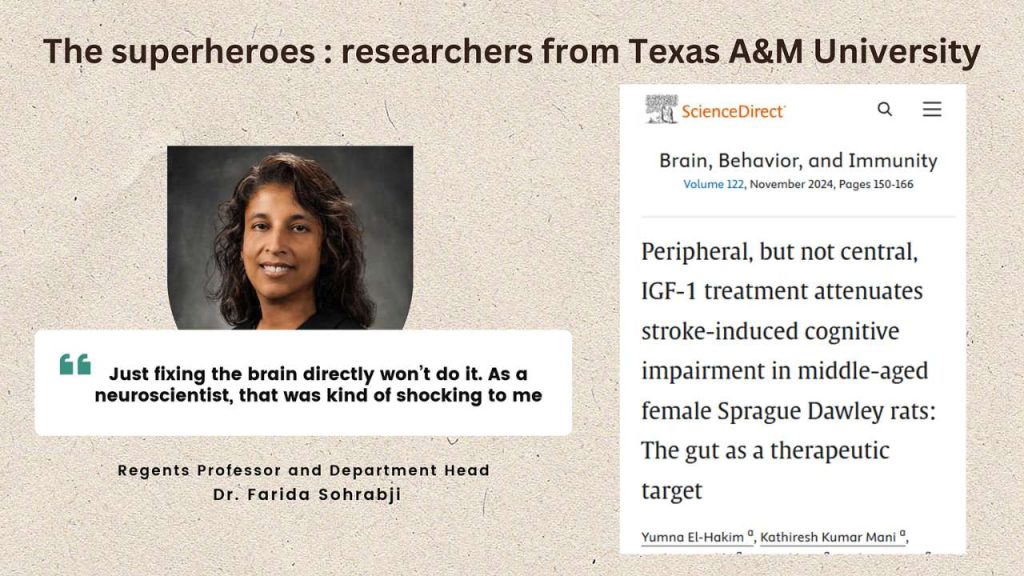
The researchers tested Insulin-like Growth Factor-1 (IGF-1), a compound known for its healing powers. When they gave IGF-1 straight to the gut, it fixed up the intestinal barrier, got its structure back to normal, and kept bad bacteria from spreading. And the cherry on top? This gut-focused treatment reduced brain inflammation and preserved cognitive function in animal models. But wait, there’s more! They also tested stem cell therapies. So, the gut has this cool way of making stem cells to fix itself, but if things get messy, you can just pop in some stem cells from a healthy donor to help things along. Not only did this heal the gut more efficiently, but it also protected brain tissue. It’s like the gut and brain had a heart-to-heart and decided to be besties!
What Does This Mean for Medicine?
This research is a game-changer. It highlights the importance of a holistic approach to medicine. It’s no longer just about fixing the brain; it’s about treating the whole system. This gut-brain connection opens the door to new treatments that could revolutionize stroke recovery. Of course, this is just the beginning. Clinical trials are really, really important for figuring out how these therapies can actually be safe and work well in people. If all goes well, we may see a huge change in how stroke survivors bounce back—one that not only protects brain health but improves overall quality of life.
So, quick questions for you: Did you know your gut is pretty much a team player for your brain health? What do you think about this fresh take on stroke recovery? Share your thoughts in the comments below—I’m super curious to hear what you think! That’s all for today’s episode of Science Codons. If you found this discovery as fascinating as we did, give this video a thumbs up and subscribe to our channel for more amazing science content. And hey, don’t keep this knowledge to yourself—share it with a friend! Until next time, stay curious, keep exploring, and maybe treat your gut to something nice. You know, like a salad. Bye!
This article was medically reviewed for accuracy by Dr. Zeinab Morshedi Yekta. The content is based on scientific evidence and is intended to be educational. It does not replace professional medical advice.
Reference📚: